


















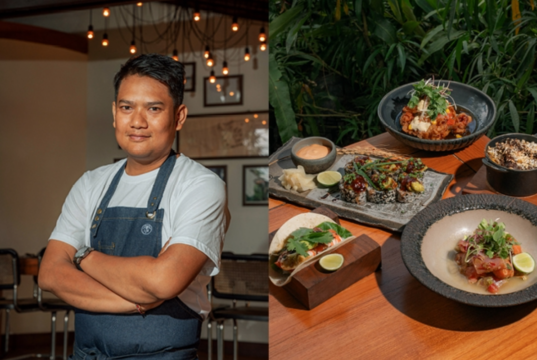






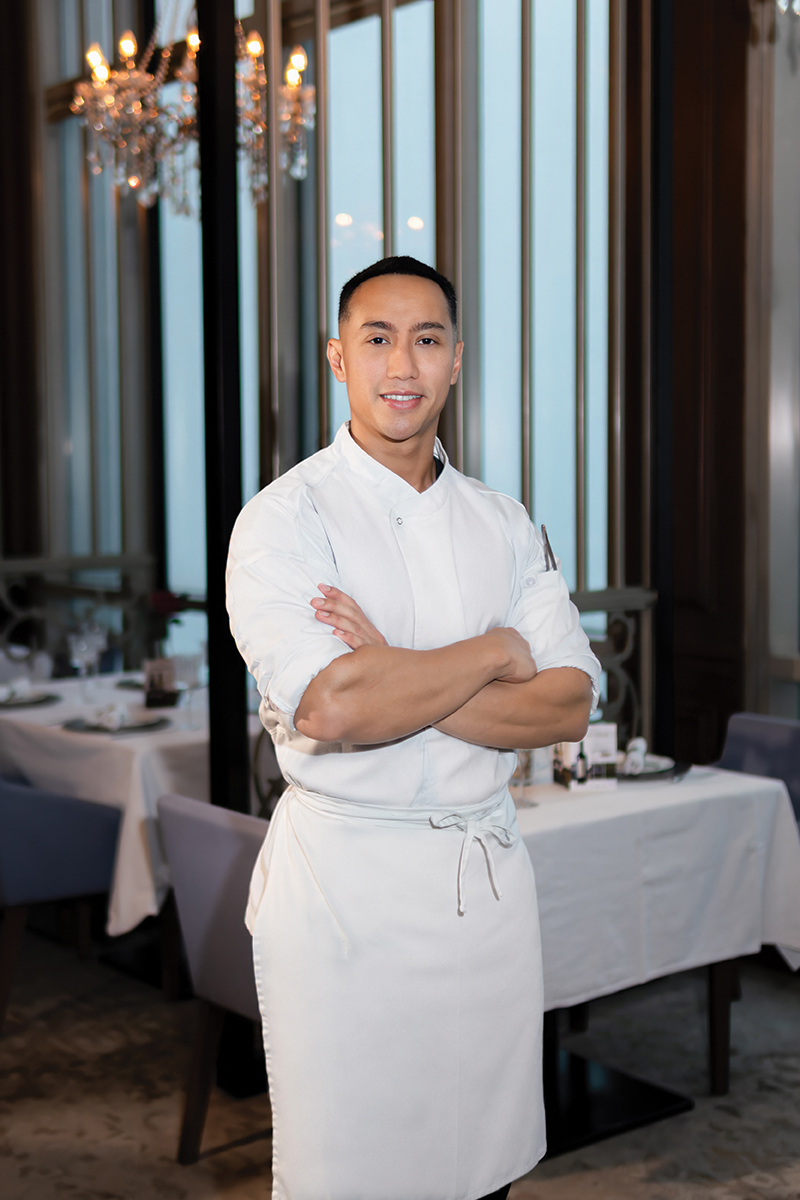
 As Indonesian cuisine gains greater international curiosity, Yuda Bustara stands at the forefront of its evolving narrative. From working under MICHELIN-starred mentors to introducing local flavours abroad, he shares his perspective on cultural adaptation, culinary identity, and the future of Indonesian food beyond borders.
E: It’s been over a year since you won The Maverick Academy. Beyond the immediate whirlwind of the win, what has your life been like since?
A: I’ve been travelling a lot, and I moved to Bangkok. After the win, I had the opportunity to work with MICHELIN-starred Chef Alvin Leung in Hong Kong as his protégé. That experience was very memorable and taught me a lot about refined, exceptional cooking. Now, I split my time between Bangkok and Jakarta, promoting Indonesian food internationally while also doing cooking demos, classes, and pop-ups back home.
E: You’re constantly navigating different cultures and collaborations. How does that fast-paced fluidity shape your perspective and the way you curate flavours?
A: Cooking Indonesian food abroad feels easier. Indonesian cuisine is still not very well known globally, so we need more chefs willing to go abroad and represent it. That’s one of the reasons I moved. When I worked in Hong Kong, I saw how people really appreciated Indonesian flavours, even in a fine dining setting. Now, I’m doing the same in Bangkok, introducing Indonesian culture and flavours to a new audience.
E: Beyond the bold and aggressive flavours, what do you think it is about Indonesian cuisine that people tend to miss out on?
A: While Indonesian cuisine is often defined by its bold profile, collaborating with MICHELIN-starred chefs has highlighted a more subtle, simplified, and refined approach. For example, in Hong Kong, we made pork rendang into har gow or dim sum. It’s still Indonesian in flavour, but lighter and easier to enjoy. As a chef, you have to adapt. People usually prefer food they are familiar with, so you need to balance authenticity with accessibility.
E: Having commanded international stages, what do you think is needed to bring Indonesian cuisine to a global level?
A: It doesn’t always have to taste exactly like how it is back home. You’re not only cooking for Indonesians; you’re cooking for the world. Cooking abroad taught me that not everyone enjoys spicy food. Sometimes you need to present Indonesian flavours in a simpler, more approachable way. Something like rawon ice cream, for example; it’s creative, yet still rooted in Indonesian ingredients like keluak.
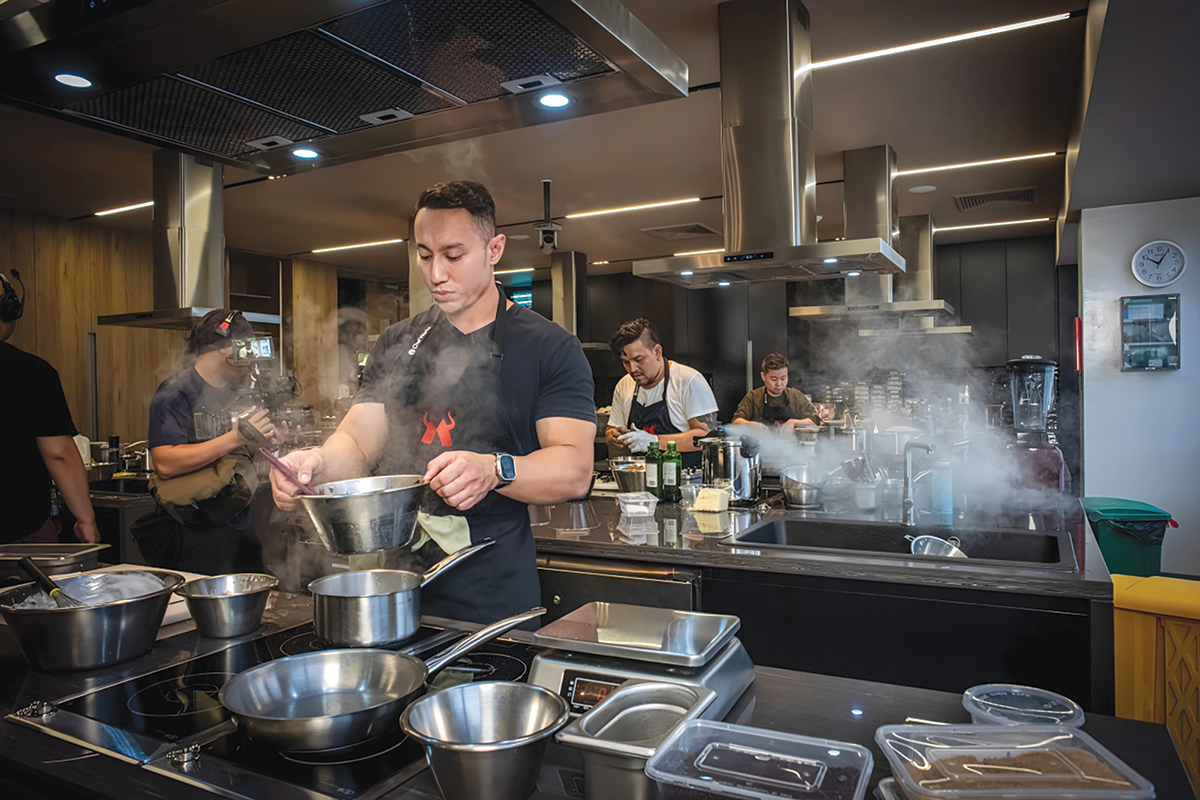 E: We often talk about the world discovering Indonesian food, but why should Indonesian food become more than just a trend?
A: Indonesian food is actually popular. The challenge is the components. Some key ingredients like keluak or torch ginger are hard to find outside Indonesia. That makes it difficult to recreate the dishes properly. As the Indonesian diaspora grow abroad, this will slowly improve. It just takes time.
E: In a world of fast-moving food content, what is the one lesson young chefs must learn about navigating the space between the screen and the plate?
A: First, chefs today need to know how to create content. Cooking skills alone are not enough anymore. Second, believe in your own food. Don’t copy others just to follow trends; you could lose your identity. People connect with stories, and being your authentic self will always stand out.
E: Beyond the accolades and titles, what would you like your definitive contribution to the Indonesian culinary tapestry be?
A: I want to be a strong ambassador for Indonesian food. Whether it’s through recipes, content, pop-ups, or even creating products that can grow into global brands, I want to help bring Indonesian cuisine to a wider audience.
E: If you could curate a deep dive into one Indonesian region flavour profile for the global stage, which one would you champion, and why?
A: This is a difficult question because Indonesia has so many cultures and cuisines. That’s why there isn’t just one dish that represents us globally. But, if I had to choose one region, I would say Bali, because people around the world already know the island, so it’s a good starting point.
Exquisite Taste Volume 51
Yuda Bustara
IG: yudabustara