
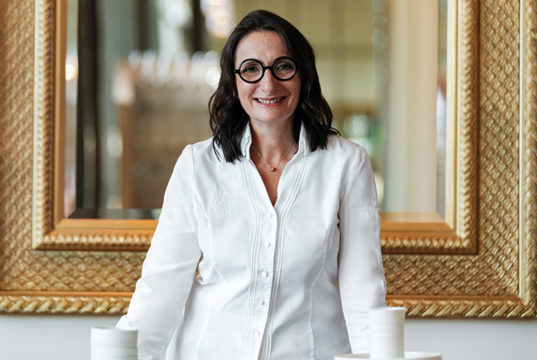
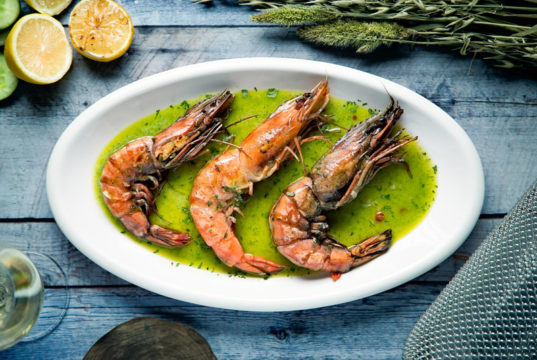
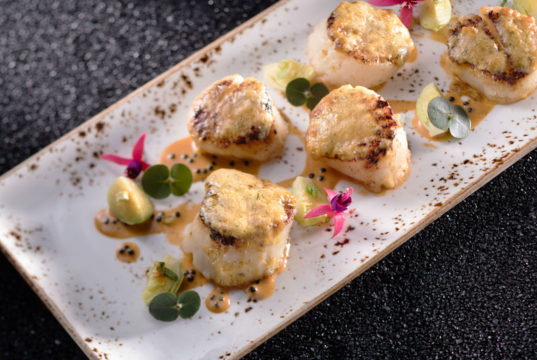
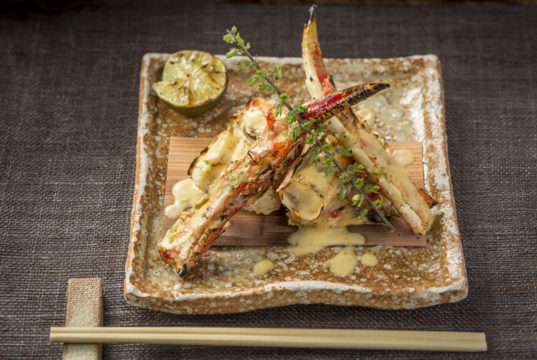
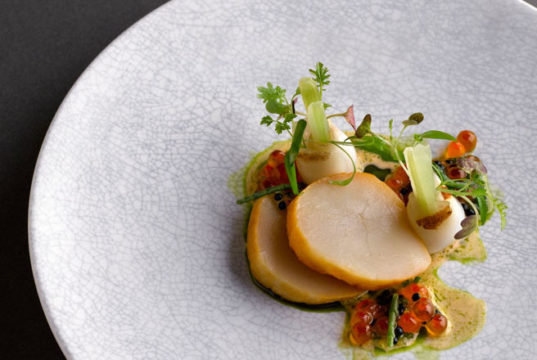



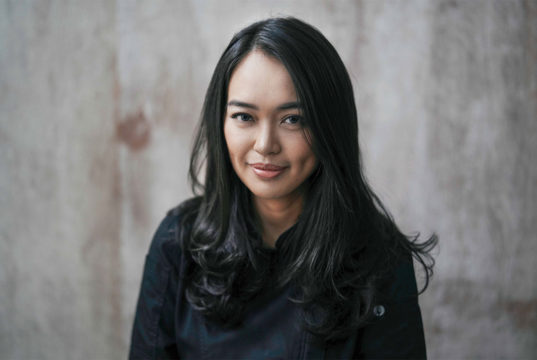
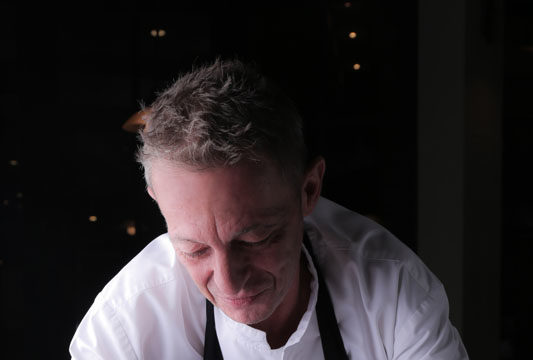

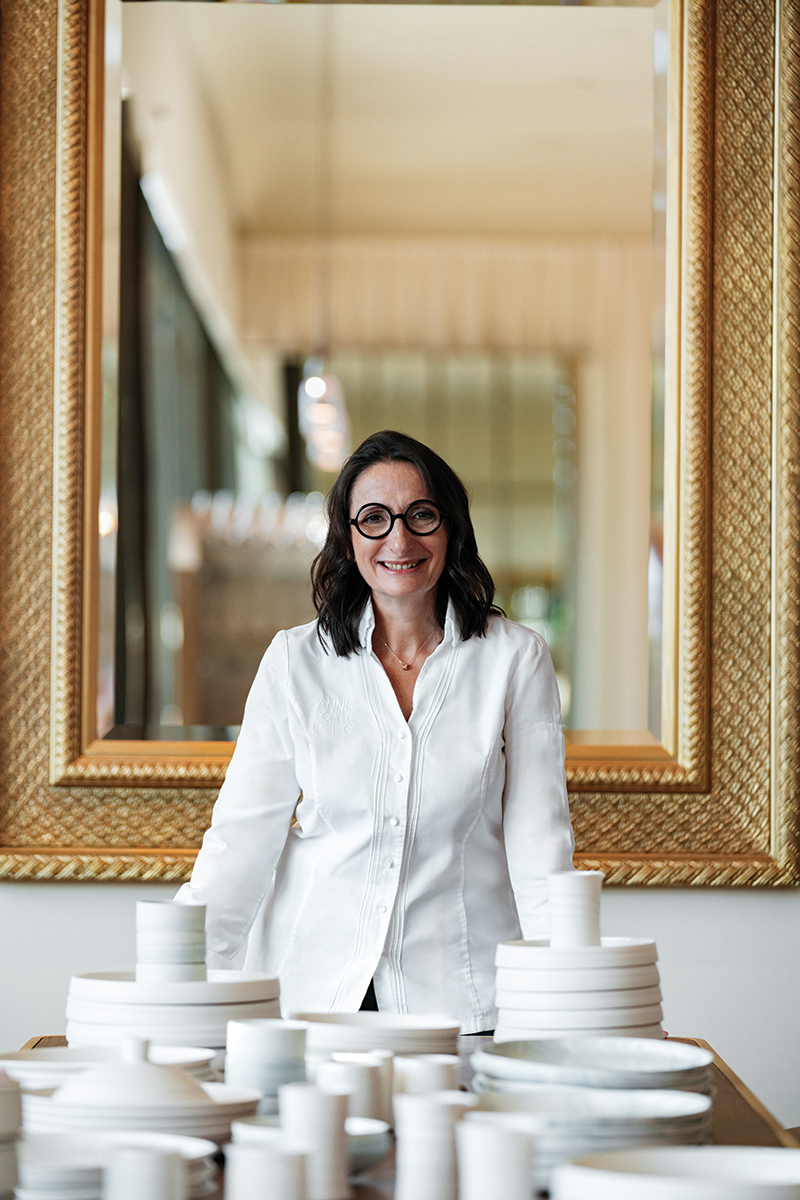
 Chef Anne-Sophie Pic brings her philosophy of Imprégnation, or Suffusion, to Lausanne, where memory, intuition, and precision quietly shape every plate. At the Beau-Rivage Palace, her cuisine unfolds as a dialogue between heritage and place, drawing inspiration from Lake Geneva and the surrounding Alps. The result is an experience that feels both deeply personal and contemporary, guided as much by emotion as by technique.
E: How has your family’s culinary legacy shaped the way you approach food and hospitality today?
A: As a fourth-generation chef, I was raised in a family where cooking and hospitality were more than professions; they were a way of life. This heritage has profoundly shaped the way I understand cuisine and the art of welcoming others. I grew up immersed in the atmosphere of our kitchens, formed by their aromas, the rhythm of service, and the meticulous attention paid to every detail. That early exposure sharpened my senses, refined my palate and awakened a lasting sensitivity to flavour. More than technique, it is this sensory memory that continues to guide me. It shapes a cuisine driven by precision, yet always in pursuit of emotion.
E: Beyond the sentimental ties to Lausanne, what drew you to choose the Beau-Rivage Palace as the home of your first restaurant?
A: I have always felt a deep connection to Switzerland. From an early age, the time I spent there shaped my culinary imagination, inspired by its pristine landscapes and rich terroir. Beyond my affection for Switzerland, and now Lausanne in particular, I was genuinely drawn to the spirit and history of the Beau-Rivage Palace. In 2009, opening my first restaurant outside Valence was a significant step, and this iconic, timelessly elegant hotel felt like the perfect place to express and share my cuisine and creative vision.
E: Your philosophy of Imprégnation (Suffusion) is central to your work. How does this philosophy translate into the menu at Pic au Beau-Rivage Palace?
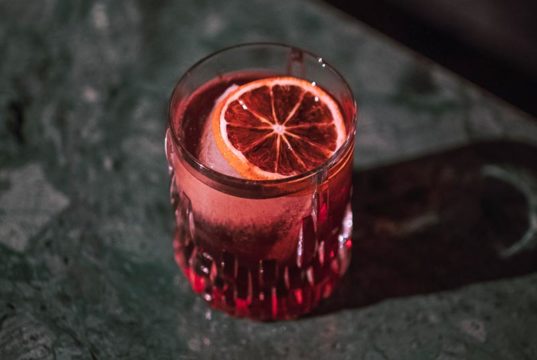
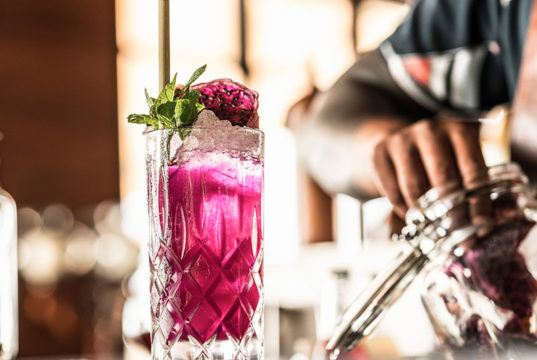
A: At the restaurant Pic at the Beau-Rivage Palace, my philosophy of Suffusion takes shape through a cuisine I strive to make deeply sensitive, celebrating the richness of the Lausanne terroir and weaving subtle aromatic dialogues between ingredients, flavours, and textures. This creative vision extends naturally to the beverage experience, conceived as a true continuation of the table. I enjoy crafting pairings, both alcoholic and non-alcoholic, that spark unexpected aromatic conversations between wines from the Rhône Valley and Switzerland, as well as original creations centred on fermentation. Together, these elements are designed to offer a fully immersive experience, where each component infuses the next, revealing a singular harmony and emotion.
 E: In your own words, what distinguishes Pic au Beau-Rivage Palace from other fine-dining destinations?
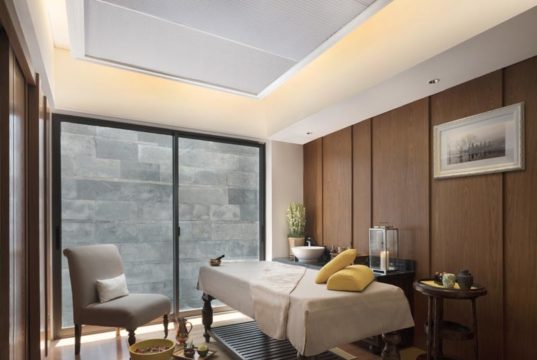
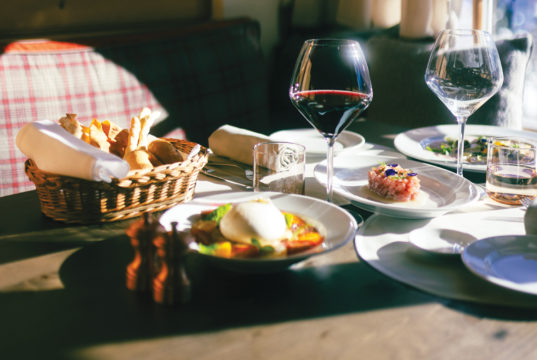
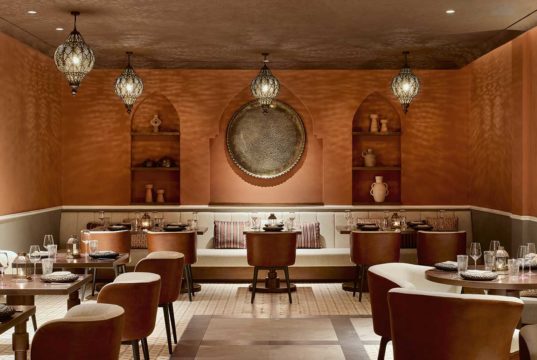
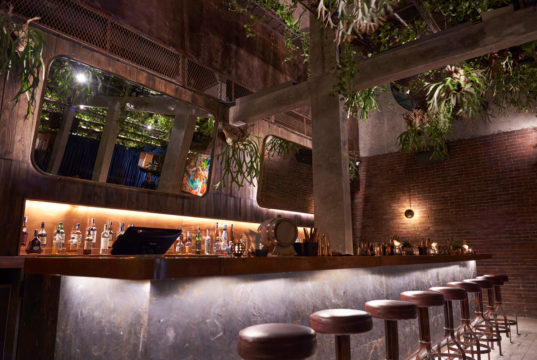
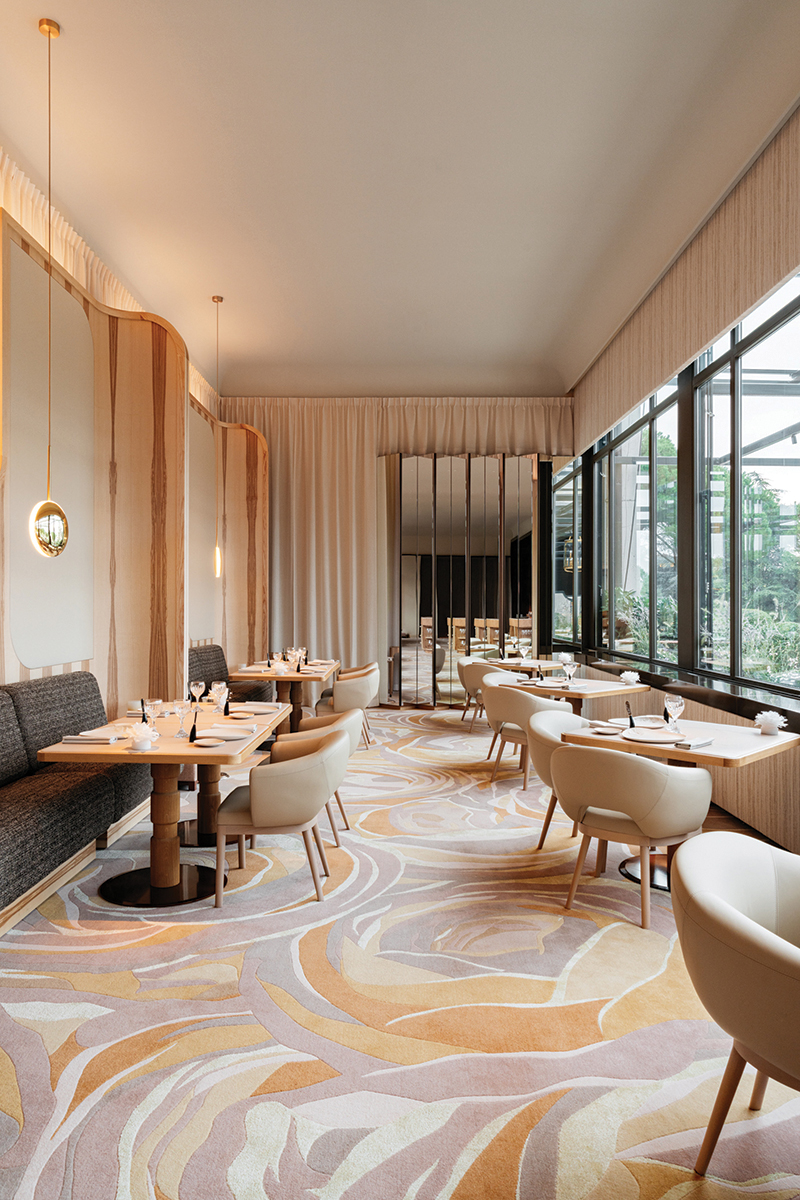
A: Designed by Tristan Auer, the setting resonates seamlessly with my world, a space deeply connected to nature, overlooking Lake Geneva, where every detail is thoughtfully conceived to elevate the act of tasting. From the dining room to the lounge, and from the terrace to the garden, each area invites a sensory journey. The experience unfolds like a cinematic composition, playing with light, perspective, and atmosphere. The bar holds a central place within this narrative, offering an interactive and highly personal moment centred on food and beverage pairings. Presented and narrated by the team, and accompanied by a dish created especially for the occasion, it becomes a true extension of the culinary experience.
E: You are known for weaving local identity and culture into your restaurants. How have Lac Léman and the surrounding Alps influenced the visual and sensory expression of your dishes here?
A: Lake Geneva and the Alps shape the way I compose my dishes at Pic au Beau-Rivage Palace, both visually and sensorially. The light, landscapes, local produce, and textures of the region inspire my creativity, and are reflected in each plate, where I aim to convey the richness and authenticity of the terroir while infusing my personal sensibility.
E: Among the dishes served at Pic au Beau-Rivage Palace, which do you feel best represents Lausanne, and why?
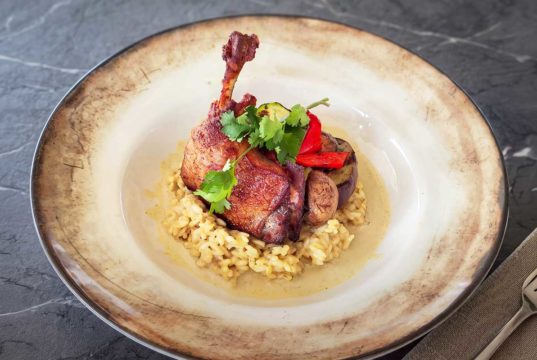
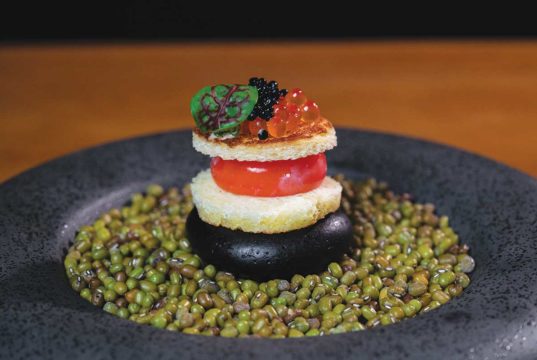
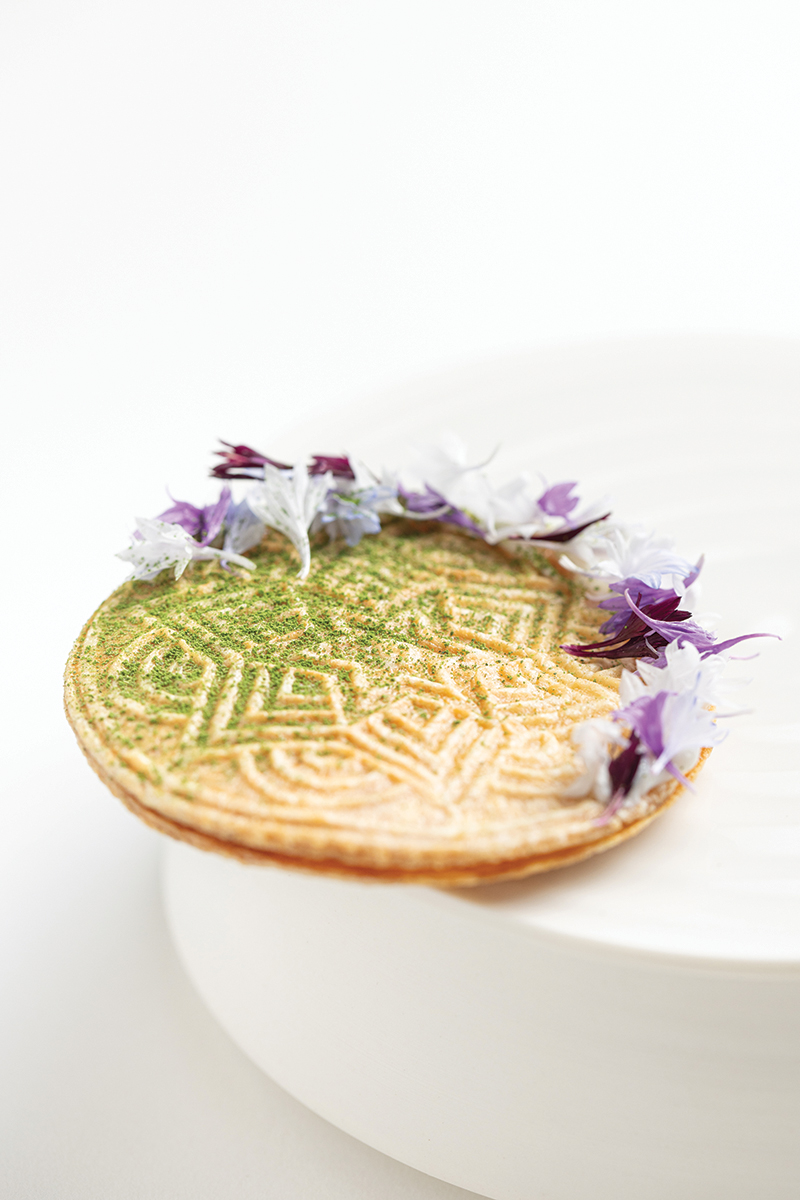
A: Among the dishes that best represent Lausanne, I think of fish from Lake Geneva, such as Arctic char or fera, which I particularly enjoy preparing and serving to my guests. As in each of my restaurants, I also offer a variation of the Berlingots, my signature dish, which I reinterpret according to terroir and season. Here in Lausanne, they are currently presented with a moitié-moitié cheese fondue, an onion consommé infused with Douglas fir and Chartreuse pepper. I also pay tribute to local traditions through creations inspired by Swiss heritage, such as the bricelet, whose finesse reflects the region’s artisanal savoir-faire.
BRICELET SUISSE (GRUYÈRE CARAMEL, VERVEINE)
 INGREDIENTS:
Bricelet (Swiss wafer) batter:
- 125g whole wheat flour
- 125g whole milk
- 50g double cream
- 50g butter
Cheese filling:
- Grated caramel Gruyère cheese
Finishing touches:
- Verbena powder
METHOD:
Bricelet batter:
Dough: Sift the whole wheat flour, mix all the ingredients except the butter to obtain a smooth batter. Make brown butter and add it to the batter. Let it rest in the refrigerator for two hours.
Bricelet: Place a small dollop (20g) of batter into the mold, cook for 45 seconds, applying light pressure. Unmold the bricelet and cut it out using a cookie cutter of the desired size. Finish baking between two sheets of parchment paper in a dry oven at 160°C (325°F) for approximately six minutes to achieve an even colour.
Serving: Grate the heart of the caramelised Gruyère cheese into the center of the bricelet (8g per bricelet, without packing the cheese down). Press very lightly to flatten the cheese, then top with the second bricelet to cover it, being careful not to let the cheese spill over. Before serving, place in a preheated oven at 180°C (350°F) for three minutes between two baking sheets.
Note: The toast should be hot; all the other toasts should be ready by then. The last toast should be on the plate.
Finishing Touches: Dust the serving side of the bricelet with verbena powder and invite your guests to break it in half to reveal the melted cheese.
Exquisite Taste Volume 51
Pic au Beau-Rivage Palace
Chemin de Beau-Rivage 21
Lausanne 1006, Switzerland
T: (+41) 216133339
E: pic@brp.ch
W: brp.ch
IG:@beaurivagepalace